How Tattoos Relate to Skin Anatomy
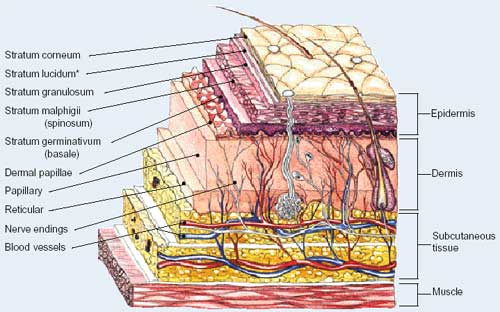
You probably already know that a tattoo is a puncture wound, made deep in your skin, with injected ink. What makes tattoos so long lasting is the depth in with they penetrate the skin - the ink isn't injected into the epidermis (top layer of skin) the ink is injected into the dermis (second layer of skin). Dermis cells are very stable, so the tattoo is practically permanent. Ink is inject about 3 millimeters into the skin, look below for perfect visual of this.
2 Layers of Skin...
Our Skin is made up of 2 basic layers, top and bottom...read on to learn about these layers.
#1: Top Layer of the Skin
Name: Epidermis
Structure: The epidermis is made up of five layers.
Stratum corneum- This is the top layer of the epidermis. It is made of dead cells and is used as a barrier to protect tissue.
Stratum lucidum- This is a thin, clear layer made of dead cells. This layer determines skin color.
Stratum granulosum- This is a thin layer that is used for hydration.
Stratum spinosum- This layer is sometimes called the “prickle-cell layer.” It is used to synthesize fibrilar proteins.
Stratum basale- This layer is one cell thick of stem cells. These cells are involved in light touch sensation.
Function: The epidermis creates your skin tone, is a waterproof barrier for your tissues and organs, and has mechanical resistance for your body.

#2: Bottom Layer of the Skin
Name: Dermis
Structure: The outer protective layer, Epidermis, is firmly attached to the inner layer, the Dermis. Embedded in the dermis are: Sweat, Sebaceous and apocrine glands, hair follicles, blood vessels and nerves. Made mostly of collagen, elastin and fibrillin, it gives the skin its flexibility and strength.
Functions:
Sweat glands:- Produce sweat in response to heat and stress
Sebaceous glands:- Secret sebum (an oil that keeps the skin moist and soft and acts as a barrier against foreign substances)
Hair follicles:- Have a portion that contain stem cells capable of regrowing a damaged epidermis. Heat makes the blood vessels enlarge (dilate), allowing large amounts of blood to circulate near the skin surface, where the heat can be released. Cold makes the blood vessels narrow (constrict), retaining the body's heat.
Blood vessels:- Provide nutrients to the skin and help regulate body temperatures

And also, we all know that our body's have FAT!!!
Fat Layer: Below the dermis lies a layer of fat that helps insulate the body from heat and cold, provides protective padding, and serves as an energy storage area. The fat is contained in living cells, called fat cells, held together by fibrous tissue. The fat layer varies in thickness, from a fraction of an inch on the eyelids to several inches on the abdomen and buttocks in some people.
Tissues
Epithelial tissue is used in the Epidermis. This tissue is used to form the outer layer of skin. This tissue effects tattooing because tattoos are on your top layer of skin. Connective tissue is in the Dermis. This tissue gives shape to organs and holds them in place. Nervous tissue is in the Dermis. It forms the brain and spinal cord. This effects tattooing because your nerves tell you that the needle hurts.